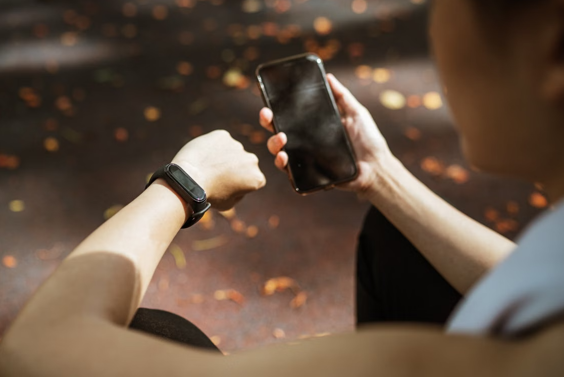
Your fitness band or watch can track walks, exercise, sleep, and heart rate.
You can use those records to show your activity after an accident.
A decreased step count doesn’t mean you’re injured, and a normal day doesn’t mean you aren’t injured. Use this as supplemental information with other evidence.
Here’s what this covers:
- What type of data can be collected
- What types of data may help
- Create a before and after timeline
- How to keep your data
- Limitations of wearable health data
- Using your fitness tracker with other evidence
- Conclusion
What type of data can be collected
Fitness trackers collect information you can use to identify habits and trends. Your device may record steps, exercise, sleep, and heart rate.
A 2026 study in JAMA Network Open found that 41.1% of U.S. adults reported using a wearable to track their health in the preceding 12 months, based on a 2024 national survey.
You want to know if that information can help demonstrate something about your injury.
Say you were walking every day before an accident but now have trouble getting to the end of the street and back. A decline in step count may support your loss of activity, but it won’t show a jury that your injury caused the change.
If the data is from the same device, it will make it easier to compare days before and after. Explain why you got a new fitness tracker or if you stopped wearing it.
Your injury attorney may look for these trends, too. For someone exploring a Dallas injury claim, the personal injury page at https://freeseandgoss.com explains the legal help available. Your attorney can help you determine what your fitness tracker data can help with.
See also: Live Chat with AI Astrologer: Real-Time Guidance for 2026 Life Shifts
What types of data may help
There are different data points that can be helpful depending on your injury. You will want different information if you hurt your wrist versus your leg.
Step count and daily activity can help show changes in your overall activity level. Try to compare similar days to each other over a period of time. Don’t just pick the lowest step count after your accident. Your work schedule, the weather, or simply taking off your device could explain a change.
If you exercised regularly, your fitness tracker may have a workout history that shows you stopped doing that after your injury. This could also be used to show that you exercised prior to your accident.
Sleep data can also be helpful to show if there are changes in your sleep at night. It won’t prove that your injury kept you awake, but your device may be able to detect that you weren’t sleeping as well.
Heart rate could also be a factor, but these can be tricky to use. Your body can elevate your heart rate from exercise, stress, sickness, or if your device isn’t on correctly. Having an elevated heart rate doesn’t mean anything on its own.
Always ask whether the data matches your injuries and what your doctor told you.
Create a before and after timeline
One picture of your step count won’t show much of your recovery. By creating a timeline, you can see your data and understand when certain things may have occurred.
Start by noting when your incident occurred. Find comparable times before and after your incident. Don’t forget days when you may not have been wearing your device.
Someone with a knee injury may have taken daily walks before their accident, then show decreased step counts after their accident.
Include dates of doctors’ visits, physical therapy, restrictions from work, and any notes of activities you had difficulty completing.
You can use this to:
- Determine if there is a decrease in activity after your incident
- See if your recovery timeline aligns with your normal activity
- Understand why there are missing days in your data
Don’t try to exaggerate what your data can show. You can walk thousands of steps and still be in pain, or you could have had a normal day where you didn’t walk as much.
Try to be as honest as possible with your timeline and back it up with other evidence.
If you had an existing condition, your data may be able to show that you weren’t as active before your accident as well. Maybe you started exercising again during your recovery; there could be a legitimate reason for that. Showing why certain days were higher or lower will be helpful.
How to keep your data
Making sure you have the original data is more important than making pretty charts.
There are different ways to collect your data, depending on your app and account. You can:
- Continue to use your device and not delete previous data.
- See if your app allows you to download all your account information.
- If you can download your data, save that information and note when you retrieved it.
- Take pictures of your information; just know these are only snippets of your data.
- Note any days when you weren’t wearing your device, switched devices, etc.
Do not cut your pictures to show only certain days, alter information, or guess what your numbers should have been. This may undermine the credibility of the records.
If your phone also has a step counter, keep that data as well. It can be helpful to know which device was tracking your steps.
Talk to your attorney before deleting any data if you feel you will be involved in litigation.
Limitations of wearable health data
Fitness trackers are great, but they aren’t made to determine if you were injured.
They collect information to estimate activity or bodily functions. Your readings may vary depending on your device, what you were doing, and how your device was placed on your body. Even if you had a good record of activity, it won’t tell why you were injured or how much pain you were in.
Can this data be proven to be authentic and reliable? That’s what needs to be determined as well.
In Texas, a party offering digital evidence generally needs to show that it is what they claim it is. The parties may dispute the dates, the device’s accuracy, and what an expert can fairly conclude. A screenshot alone does not settle those questions.
This information can work against you as well. An insurance company could use your fitness tracker to show you were active, but that doesn’t mean you weren’t in pain, taking medication, or suffering consequences from the activity. You will want to explain your reasoning and have medical evidence to go along with it.
Your fitness tracker could have your location, sleep patterns, etc. Consumer apps may not fall under HIPAA, so your data may not be as protected as you think it is.
Be careful of posting your information online, and talk to your attorney about how to share your information. The other party may request this information as well.
Using your fitness tracker with other evidence
The best way to use your fitness tracker is as supplemental evidence. Other credible records may help corroborate its activity patterns, although the full evidence still needs to be assessed.
Medical records can show your injury and what your doctor believes may occur because of your injury. Your fitness tracker can give more insight into your daily life, but you have to understand the accuracy and gaps in your data.
Your fitness tracker will not be able to determine fault or the amount of damages you may be owed. It also may not be able to show if you had pain, loss of balance, or additional work you had to do.
Conclusion
There are many pieces of information that can be used to demonstrate that you were injured. Having a record of what you did before your accident can be very helpful. Steps, workouts, sleep, etc. can all be used to show changes in your life.
Make sure to keep your original data, explain any gaps, and have other evidence to support your claim. Fitness trackers can help, but don’t rely on them to prove your case.