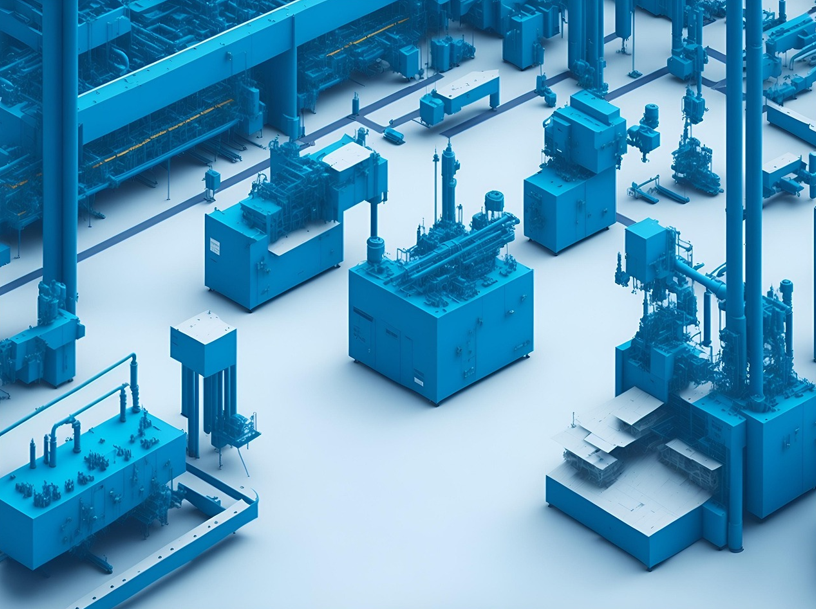
Running a business on legacy equipment feels safe.
It works great. It still runs. “If it ain’t broke, don’t fix it” has become the manufacturing motto for years. But here’s the reality many operations managers don’t want to face…. That old machine is slowly sucking money out of your business every day.
Escalating energy prices, stricter emission regulations and unplanned downtime sapping profits have made upgrading legacy machinery no longer just a “nice to have” but a business imperative.
The key takeaways below:
- What “modernising legacy equipment” really means
- The hidden costs of running old machinery
- Where continuous duty motors fit into the picture
- Practical ways to start modernising today
What Does Modernising Legacy Equipment Actually Mean?
Modernising legacy equipment doesn’t necessarily mean tearing everything out and starting from scratch. In many cases, it involves replacing components of a machine that are most expensive to operate or fail most frequently. This can include replacing outdated drives, controls, sensors, and continuous duty motors that were installed 30+ years ago.
Why motors? Well, specifically continuous duty motors. These motors drive industry. They’re on for hours, days, weeks at a time constantly pushing. Any wasted efficiency is multiplied by every hour it operates. Simply moving to a modern industrial electric motor with a variable speed drive can reduce energy usage, increase process control and cut down on heat waste. That’s why so many managers are choosing to upgrade motors before anything else.
And it’s a massive opportunity. ABB says more than 40% of global electricity is consumed by industry, two-thirds of which is used by electric motors. A lot of electricity is being wasted by old motor systems every day.
The Hidden Costs Of Sticking With Old Machinery
Obsolete equipment costs dollars to operate. But it also costs dollars that don’t appear on any balance sheet.
Here are the biggest hidden costs:
- Increased energy costs: Older motors and controls use significantly more electricity than new ones.
- Increased unplanned downtime: Machines are failing more frequently, and spare parts are becoming scarce.
- Decreased production capacity: Older equipment typically operates slower and with less precision than newer machines.
- Increased maintenance costs: Legacy equipment consumes more spare parts, engineering hours and overtime.
- Compliance risks: Changes in safety, emissions and efficiency standards can leave businesses with older kit open to non-compliance risks.
Factor those numbers over the course of a year and that “cheap” legacy machine suddenly becomes the most expensive piece of equipment in your entire plant.
Why Legacy Equipment Is Slowing Manufacturers Down
Manufacturing’s been slow to modernise. In fact, stats prove it. Research found that 74% of manufacturers still operate disconnected legacy platforms that inhibit Industry 4.0.
That’s a scary number. It means most factories are missing out on:
- Real-time production data
- Predictive maintenance
- Automated scheduling
- Remote monitoring
And it goes deeper than that…. If older equipment is unplugged from your current ecosystem you are forced to make decisions based on instinct rather than real time data. This is a huge disadvantage when margins are razor thin and customers demand more, cheaper, better every year.
Energy Efficiency: The Fastest Route To Big Savings
Want the quickest win from modernising legacy equipment? Focus on energy first.
Legacy motors and drives were manufactured at a time when electricity was inexpensive and efficiency was considered a “nice to have.” Today, energy costs are one of the largest expenses in any operation.
Here’s the good news:
New high-efficiency motors and variable speed drives can often justify their costs in just a few years through energy savings. More comprehensive motor system upgrades typically achieve about 50% greater savings than optimizing the motor alone.
That means:
- Faster payback
- Lower running costs
- Reduced carbon emissions
- Less strain on the grid
Not bad for a single upgrade, right?
Downtime Is Killing The Bottom Line
Ask any plant manager what keeps them up at night. Downtime.
Every minute the production line is down, money is being lost. Older equipment seems to break down unexpectedly. Replacement parts often take days or weeks to arrive. And finding engineers who understand how to repair 30-year-old machinery becomes more difficult each year.
Modernising legacy equipment fixes all of this. New machines come with:
- Built-in sensors that predict failures before they happen
- Standardised parts that are easy to source
- Remote diagnostics so faults can be fixed faster
- Better documentation and support
That kind of reliability transforms operations from reactive firefighting into planned, predictable production.
How To Modernise Without Breaking The Bank
…the thing is… upgrading legacy technology doesn’t necessarily mean having to throw millions of dollars at it at once. Some would argue that the most intelligent companies upgrade slowly but surely.
Here is a simple starting plan:
- Perform equipment audit: Determine highest cost machines regarding energy use and downtime.
- Focus on the worst offenders first: Tackle the equipment that will give you the greatest bang for your buck.
- Upgrade motors and drives first: They provide the quickest payback of any upgrade.
- Retrofit legacy machines: Add sensors and connectivity to legacy equipment to modernize.
- Invest savings: Use energy and downtime savings to pay for future upgrades.
That’s modernisation that pays for itself. One phase silently funds the next phase, and the company grows stronger with every upgrade achieved.
Building A Modernisation Roadmap
The most successful modernisation projects don’t occur spontaneously. Someone analyses the operation as a whole and crafts a plan.
A good modernisation roadmap should answer three questions:
- What equipment needs upgrading first?
- What is the expected return on each upgrade?
- How will the savings be reinvested?
When you answer those questions, your entire business can get rowing in the same direction. Engineers have visibility. Finance has something to plan for. And leadership understands what to expect from the numbers.
Final Thoughts
Equipment modernisation is more than just upgrading legacy equipment to something new. Keeping up with today’s high energy costs, zero-downtime demands and increasing customer expectations each year.
To recap:
- Old equipment costs way more than the numbers show
- Continuous duty motors are one of the biggest opportunities for a quick win
- Energy efficiency alone can deliver strong payback in just a few years
- A phased approach makes modernisation affordable for any size of business
- Doing nothing is usually the most expensive option of all
Companies that view modernisation as an imperative will be the ones remaining ten years from now. Others will be replaced by those who didn’t hesitate to move first.