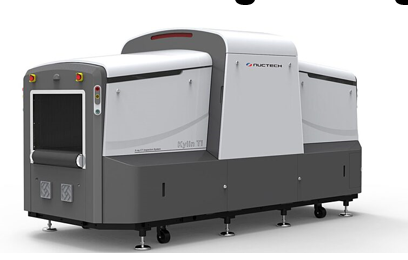
Airports have always been bustling hubs of activity, but in recent years, they’ve also become high-tech marvels of security innovation. It’s fascinating how technology has stepped up to the plate to make sure that every passenger, bag, and piece of cargo is thoroughly checked and safe to travel. From AI-powered X-ray scanners to advanced trace detection systems, the evolution in airport security is nothing short of impressive. One fascinating aspect is the development of the xray suitcase scanners that offer detailed insights into luggage contents.
As anyone who’s been through an airport recently can attest, security measures are stringent. But behind the scenes, it’s not just about random checks and long queues. There’s a whole world of sophisticated technology working tirelessly to keep us safe. And honestly, it’s kind of mind-blowing when you think about it.
X-ray scanners: not just for bones
Remember those old TV shows where doctors would look at X-ray images to find broken bones? Well, X-ray technology has come a long way since then. In the context of airport security, X-ray scanners are now equipped with AI systems that can analyze images with incredible accuracy. Imagine a machine that doesn’t just see through your bag but actually understands what it’s looking at. That’s where we are today.
The AI aspect is particularly fascinating. These systems use deep learning algorithms to differentiate between harmless items and potential threats. Have you ever wondered why sometimes your bag gets pulled aside for a closer look? It’s because the AI detected something unusual. And while it may be a bit annoying, it’s reassuring to know that these machines are so thorough.
Moreover, these advanced X-ray scanners aren’t just limited to airports. They’re being used in various other settings like customs facilities and mass transit stations. The goal? To make sure that wherever there are large crowds, there’s an efficient system in place to keep everyone safe.
Ct scans take baggage checks to the next level
If you think X-ray scanners are cool, wait until you hear about CT scans for baggage checks. Yes, the same technology used in medical imaging is now being employed at airports to give a 3D view of what’s inside your luggage. This isn’t just about looking at flat images anymore; it’s about getting a detailed understanding of every item in your bag.
CT scanners use spiral CT combined with dual-energy technology to identify explosives and contraband with minimal false alarms. Think about it: a machine that can rotate around your bag, taking multiple images from different angles, and then constructing a 3D model. It’s like something out of a sci-fi movie!
This level of detail is crucial for airport security. It allows for more accurate detection of potential threats without causing unnecessary delays for passengers. And let’s face it, anything that makes the security process quicker and more efficient is a win in everyone’s book.
Sniffing out trouble with advanced trace detection
While X-ray and CT scans are great for spotting physical objects, what about substances that might not show up as clearly? That’s where advanced trace detection systems come into play. These devices can detect minute traces of explosives or narcotics, ensuring that nothing slips through the cracks.
Using technologies like Ion Mobility Spectrometry (IMS), these detectors can identify even the smallest amounts of dangerous substances. It’s like having a super-sensitive nose that can sniff out trouble from a mile away. For more comprehensive details on such systems, check out explosives detection technologies. And they’re not just stationary devices either; there are handheld models for field use, making them incredibly versatile.
Imagine a device that’s small enough to carry around but powerful enough to detect traces of dangerous substances instantly. That’s what we’re talking about here. And it’s not just for airports either; these devices are used at border crossings, seaports, and even major events to ensure everyone’s safety.
See also: Technology Trends Shaping the Future of Theatre Operations
Thermal imaging: more than meets the eye
Another fascinating technology making waves in airport security is thermal imaging. While it’s often associated with night vision or wildlife documentaries, thermal imaging has practical applications in detecting concealed items on passengers or in luggage.
Thermal cameras can pick up on heat signatures, revealing hidden objects that might not be visible to the naked eye or even traditional X-ray scanners. It’s like giving security personnel a sixth sense, allowing them to see things that would otherwise go unnoticed.
This technology is particularly useful in identifying items that might be hidden under clothing or within thick layers of material. It’s yet another layer of security ensuring that nothing harmful makes its way onto an airplane or into a crowded venue.
In conclusion, the advancements in airport security technology are nothing short of remarkable. From AI-powered X-ray scanners and CT scans to advanced trace detection and thermal imaging, each innovation plays a crucial role in keeping us safe. It’s comforting to know that behind every checkpoint and scanner is a network of sophisticated systems designed with our safety in mind.