Buying textured art is the easy part. Keeping it looking as good as the day it arrived is where most people quietly drop the ball. It’s not that textured canvases are high-maintenance, exactly. It’s that they need a slightly different kind of attention than a regular flat print, and nobody really tells you that until something’s already gone a little wrong.
Why Textured Canvases Need Their Own Care Routine
A flat painting is fairly forgiving. Wipe it, dust it, move it around — there’s not much surface detail to worry about damaging. Textured canvases are built up in layers, often with raised ridges, swirls, or sculpted sections, and that dimension is exactly what makes them fragile in ways a flat piece isn’t.
Dust settles differently too. On a flat surface it just sits there, easy to wipe away. On a textured one, it gets into every groove and crevice, which makes it both harder to spot early and easier to accidentally push in deeper if you clean it the wrong way.
If you’ve built up a small collection of these pieces over time, a little routine care goes a long way toward keeping them looking sharp for years instead of just a season or two.
Daily and Weekly Habits That Actually Matter
Keep Them Out of Direct Airflow
Placing a textured canvas near a vent, an open window, or a ceiling fan sounds harmless, but constant airflow pulls in more dust than you’d expect, and that dust settles right into the texture. Repositioning a piece just a few feet away from a vent can genuinely cut down on how often you need to clean it.
Do a Quick Visual Check Every So Often
You don’t need a formal cleaning schedule, but glancing at your pieces every few weeks helps you catch dust buildup before it becomes a bigger job. Catching it early means a light dry brush is usually all you need, rather than a more involved cleaning session later.
Watch the Light Exposure
Textured canvases, especially ones with any color in the mix, can fade unevenly if they’re in constant direct sunlight. The raised areas often catch more light than the recessed ones, which can create a slightly patchy look over time if you’re not paying attention to where the piece is hung.
How to Actually Clean a Textured Canvas
Start Light, Always
A soft, dry paintbrush is usually the safest first move. Brush gently in the direction of the texture, not against it, since going against raised ridges is more likely to catch and chip small bits off.
Move to Compressed Air for Stubborn Spots
For dust that’s settled deep into grooves a brush can’t fully reach, a short burst of compressed air held a few inches away works well. It’s a no-contact method, which makes it one of the safest options for detailed or heavily textured sections.
Save Cloths for Flat Areas Only
If a piece has any flat sections alongside the textured parts, a slightly damp microfiber cloth is fine there. Keep it away from raised texture entirely, though — moisture doesn’t play well with plaster-based surfaces, and even a small amount can weaken the material over time.
For a more detailed walkthrough with specifics on tools and technique, there’s a dedicated resource on artwork maintenance that covers the full cleaning process step by step, including how to handle buildup that’s been sitting for a while.
Caring for Different Types of Pieces in a Mixed Collection
Heavily Sculptural Pieces
These need the most careful handling, since there’s more surface area and more raised detail for dust to collect on. Stick with dry brushing and compressed air, and clean them a bit more frequently than flatter pieces in your collection.
Subtly Textured or Minimalist Pieces
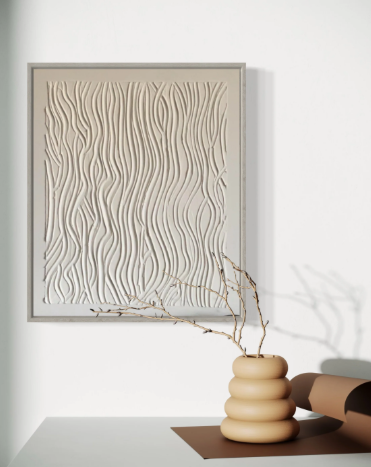
Not everything with texture looks obviously textured. A piece like this minimalist textured painting might read as clean and simple from across the room, but it can still carry small raised elements that deserve the same gentle care as a more obviously sculptural piece. It’s easy to forget these need any special attention at all, since they don’t look “textured” in the way a heavily ridged plaster piece does.
Pieces With Mixed Media
If any of your pieces combine texture with other materials — fabric, wood accents, metallic elements — treat each material according to its own needs rather than cleaning the whole thing the same way. What’s safe for plaster isn’t necessarily safe for a wood or metal accent nearby.
Common Mistakes People Make With Textured Collections
Cleaning everything the same way. Not all textured pieces are built the same, and a technique that’s fine for one canvas might be too aggressive for another, especially if they use different materials or finishes.
Waiting too long between cleanings. Buildup that’s been sitting for months is a lot harder to remove safely than dust that’s caught early. Regular light maintenance beats occasional deep cleaning every time.
Using the wrong tools out of convenience. Grabbing whatever cloth or duster is nearby, rather than a dedicated soft brush, is one of the most common ways people accidentally damage raised texture without realizing it in the moment.
Forgetting about humidity. Bathrooms and kitchens tend to have more moisture in the air, which isn’t ideal for plaster-based texture unless the piece was specifically sealed with that environment in mind.
Rotating and Rearranging Your Collection
If you have several textured pieces, rotating their placement occasionally isn’t just a styling choice, it can also help with wear. A piece that’s always in direct sun or near a heavily trafficked doorway takes more of a beating over time than one in a quieter corner. Moving pieces around every so often spreads out that exposure a bit more evenly across your whole collection.
It also just keeps your space feeling fresh, which is a nice side benefit of a practice that’s really about protecting your investment.
When to Consider Professional Help
Most day-to-day maintenance is well within DIY territory, but there are moments where it’s worth reaching out to a professional instead. Significant buildup that’s gone untouched for a long time, visible chipping or cracking, or discoloration that doesn’t respond to gentle dry cleaning are all signs that pushing further on your own could do more harm than good.
See also: How Small Businesses Scale Faster with UV DTF Transfers
FAQ
How often should I clean a textured canvas collection?
A light dry-brush pass every few weeks is usually enough for most pieces. Higher-traffic or higher-dust areas, like kitchens, might need slightly more frequent attention than a quiet bedroom or hallway.
Can I clean all my textured pieces the same way regardless of style?
Not necessarily. Heavily sculptural pieces and subtly textured ones can both benefit from gentle dry cleaning, but always check for mixed materials or unusual finishes first, since those sometimes need a slightly different approach.
Is it normal for textured canvases to show some wear over time?
A small amount of natural aging is normal, especially in sunlight-exposed spots. Significant chipping or flaking isn’t typical wear, though, and usually points to either handling issues or a cleaning method that was a bit too rough for the piece.
Caring for a textured canvas collection really just comes down to patience and the right light touch. Skip the shortcuts, stick with soft tools, and check in on your pieces regularly instead of letting dust pile up. Do that, and your collection will keep that dimension and depth that made you want it in the first place.