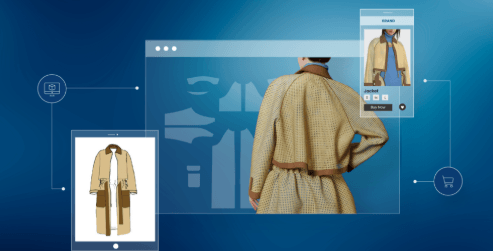
The global fashion landscape has shifted. Gone are the days when creative collaboration was confined to physical studios filled with mood boards, fabric rolls, and heavy workstations. As remote work becomes a permanent fixture in the professional world, the fashion industry has had to find a way to maintain its tactile and visual essence in a digital space. The answer lies in the cloud.
Cloud-based fashion design is no longer just a luxury for tech-forward brands; it has become the essential infrastructure that allows global teams to design, iterate, and produce at the speed of modern retail.
The Death of the Local Server and the Rise of Agility
In the traditional digital workflow, designers were often tethered to high-powered desktop computers in specific offices because the files required for 3D garment rendering are massive. Sharing these files meant long upload times, version control nightmares, and the constant risk of data loss.
Cloud technology has changed this dynamic entirely. By moving the heavy lifting of processing and storage to remote servers, creative teams can now access complex 3D assets from anywhere in the world. This transition has birthed a new era of agility where a designer in London, a pattern maker in Lahore, and a manufacturer in Guangzhou can work on the exact same file simultaneously.
Centralized Collaboration: The Digital Headquarters
The most significant advantage of this shift is the creation of a “Single Source of Truth.” When teams use a dedicated platform like Style3D Cloud, they eliminate the confusion of multiple file versions.
1. Real-Time Feedback Loops
In a remote setting, communication is the biggest bottleneck. Cloud platforms allow stakeholders to leave comments directly on 3D models. Instead of sending 20 emails to explain a change in the collar shape, a creative director can mark the specific area on the digital twin, and the designer sees it instantly.
2. Streamlined Asset Management
Fashion houses deal with thousands of textures, trims, and patterns. A cloud-based library ensures that every team member is using the correct, brand-approved assets. This consistency is vital for maintaining brand identity across different product lines and seasons.
Breaking Down the Silos Between Design and Production
One of the oldest problems in fashion is the “hand-off” gap—the moment a design leaves the creative studio and goes to the factory. Often, technical details get lost in translation, leading to costly mistakes in physical samples.
Cloud-based systems bridge this gap by providing manufacturers with a “Live” tech pack. Factories don’t just see a flat image; they can interact with the 3D garment, check the tension of the digital textiles, and understand the construction without needing a single physical prototype. This transparency reduces the sampling cycle from weeks to days, significantly lowering the carbon footprint of the production process.
Security and IP Protection in a Remote World
For fashion brands, Intellectual Property (IP) is their most valuable asset. The idea of designers carrying sensitive CAD files on personal laptops or sending them via unsecure file-sharing sites is a security nightmare.
Modern cloud solutions provide enterprise-grade security. Access can be revoked instantly if a freelancer leaves a project, and every change is tracked with a digital footprint. This allows creative directors to breathe easy, knowing their upcoming collections are protected by encrypted environments rather than just a wing and a prayer.
The Economic Case for Cloud Migration
Beyond the creative benefits, there is a hard financial logic behind the move to the cloud.
- Reduced Hardware Costs: Since the cloud handles the heavy rendering, firms no longer need to buy $5,000 workstations for every junior designer. Even a standard laptop can run powerful design software through a browser-based cloud interface.
- Faster Time-to-Market: In the age of “ultra-fast fashion,” being two weeks late can mean the difference between a best-seller and a clearance rack. Cloud collaboration shaves off the dead time spent waiting for physical shipments or file syncs.
- Scalability: If a brand needs to scale up for a massive seasonal collection, they can instantly add more users and storage to their cloud environment without needing to install physical servers or IT infrastructure.
Empowering the Next Generation of Global Talent
The cloud has effectively “democratized” fashion design. Talent is no longer restricted by geography. A brilliant designer living in a remote area can now work for a major fashion house in Milan or New York without relocating.
This global talent pool brings diverse perspectives to design, but it can only be harnessed if the tools are accessible. Cloud-based platforms act as the digital bridge, ensuring that the only thing that matters is the quality of the creative output, not the speed of the designer’s local internet or the power of their hardware.
Overcoming the “Physicality” Barrier
Critics of digital-only workflows often argue that you can’t feel the fabric through a screen. While true, cloud-based 3D visualization has become so sophisticated that it simulates the “feel” through data. By viewing high-fidelity simulations of how a garment drapes and stretches, teams can make 95% of their decisions digitally.
The cloud enables the visualization of these simulations at a level of detail that was previously impossible. You can see the light reflecting off a sequin or the way a heavy wool coat swings when the digital avatar walks—all rendered in the cloud and streamed to your device.
See also: High-tech security: how airports are using cutting-edge tech
Conclusion: The Future Is Collaborative and Connected
The fashion industry is at a tipping point. The companies that continue to rely on siloed, local workflows will eventually be outpaced by those who embrace the connectivity of the cloud.
By adopting a standard that prioritizes real-time collaboration, global accessibility, and data security, fashion brands are doing more than just surviving the remote work trend—they are evolving into more efficient, sustainable, and creative versions of themselves. The “New Standard” is clear: the future of fashion isn’t just designed on a computer; it’s designed in the cloud.